Security threats do not only happen during daylight hours. Many incidents involving homes, businesses, and commercial properties occur at night when visibility is naturally reduced. For this reason, having a surveillance system that can continue monitoring effectively after dark is an important part of modern security planning.
Night vision technology has transformed the way security cameras operate by allowing them to capture useful footage in low-light and nighttime conditions. Instead of relying only on daytime visibility, property owners can maintain better awareness around their locations at all hours.
Whether protecting a residential property, retail store, office, or industrial facility, choosing the right camera technology can make a significant difference in overall security performance.
Why Nighttime Monitoring Is Important
Many properties become more vulnerable after business hours or late at night. Reduced activity, limited lighting, and fewer people nearby can create opportunities for unauthorized access or unwanted activity.
Traditional cameras without proper low-light capabilities may produce dark, unclear footage that is difficult to review. Important details such as faces, vehicles, or movement may not be visible when lighting conditions are poor.
Night vision technology helps solve this challenge by allowing cameras to continue capturing footage even when natural light is limited.
For homeowners, this can provide better awareness around entrances, driveways, and outdoor spaces. For businesses, nighttime monitoring can help protect inventory, equipment, and facilities when employees are not present.
Understanding How Night Vision Technology Works
Night vision cameras are designed to improve visibility in dark environments by using specialized technology that captures available light and enhances the image.
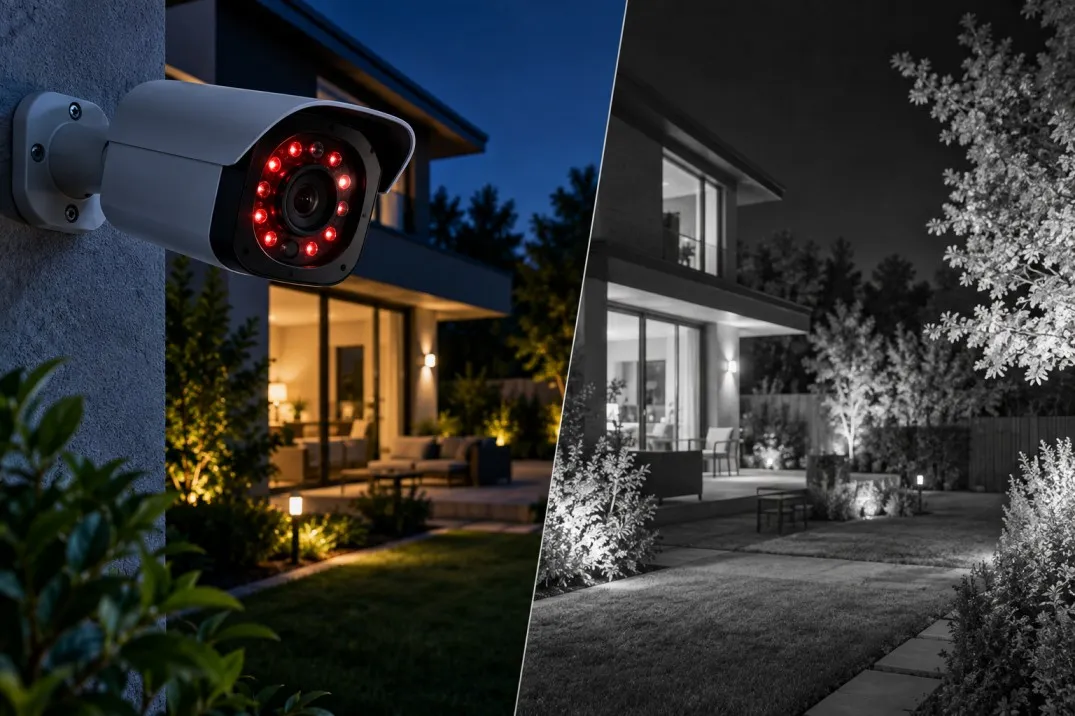
Many systems use infrared illumination, which allows cameras to record activity even when the surrounding area appears completely dark to the human eye.
Infrared technology works by using invisible light that cameras can detect. This allows the system to create clearer images without requiring bright outdoor lighting.
Some advanced cameras also use improved sensors and image processing technology to provide better detail in challenging conditions.
The quality of nighttime footage depends on several factors, including camera design, sensor quality, placement, and surrounding lighting conditions.
Benefits of Night Vision Security Cameras
Installing cameras with strong nighttime capabilities provides several advantages for property owners who want consistent monitoring.
One of the biggest benefits is continuous protection. Security systems should not stop being effective when the sun goes down. Night vision allows cameras to continue operating during hours when visibility is naturally reduced.
Other benefits include:
- Improved visibility in dark areas
- Better monitoring of outdoor spaces
- Clearer recorded footage during nighttime events
- Greater awareness when properties are unoccupied
For properties that require reliable monitoring around the clock, night vision security cameras provide an important solution for maintaining visibility after dark.
Protecting Residential Properties at Night
Homeowners often focus on securing doors and windows, but outdoor areas can also require attention. Driveways, garages, side entrances, and backyards are common locations where additional monitoring can improve safety.
Night vision cameras allow homeowners to check activity around their property even when outdoor lighting is limited.
For example, a camera installed near a driveway can help capture vehicle activity during nighttime hours. A camera near an entrance can provide information about visitors or unexpected movement.
Remote viewing features also allow homeowners to check their cameras from mobile devices, providing additional confidence when away from home.
Supporting Businesses With Better After-Hours Security
Businesses face unique security challenges when locations are closed. Offices, warehouses, retail stores, and commercial facilities often contain valuable equipment and inventory that require protection.
Night vision surveillance helps businesses maintain monitoring capabilities after employees leave for the day.
Clear nighttime footage can assist with reviewing activity around entrances, loading areas, storage rooms, and parking spaces.
For business owners, having reliable after-hours visibility can help reduce uncertainty and provide important information if an incident occurs.
Choosing the Right Camera Placement for Night Monitoring
Even the best night vision technology will not perform effectively if cameras are installed in poor locations.
Professional planning is important when deciding where cameras should be positioned. Installers evaluate areas that require monitoring and consider factors such as distance, lighting, camera angle, and possible obstacles.
Outdoor cameras should be positioned to capture important activity while avoiding issues such as direct light sources that may affect image quality.
Proper placement helps ensure that nighttime footage provides useful information instead of unclear images.
The Importance of Image Quality in Low-Light Conditions
Not all night vision cameras provide the same level of performance. Image quality depends on the camera’s sensor, resolution, infrared range, and overall design.
High-quality cameras can capture more details, making it easier to identify important information from recorded footage.
For example, a clearer image may help distinguish between different vehicles or provide better visibility of individuals entering a property.
Choosing reliable equipment is an important part of creating an effective surveillance system.
Combining Night Vision With Smart Security Features
Modern security systems often combine night vision capabilities with other advanced features to create more effective monitoring solutions.
Motion detection allows cameras to focus on activity rather than continuously recording empty areas. Smart alerts can notify property owners when movement is detected.
Remote access allows users to check live footage and recordings from almost anywhere.
When combined, these features create a more complete security approach that provides both visibility and convenience.
Why Professional Installation Matters
Proper installation plays an important role in maximizing the benefits of night vision cameras.
Security professionals understand how to evaluate lighting conditions, determine ideal camera positions, and configure settings for better performance.
Incorrect installation may result in poor visibility, limited coverage, or cameras that do not capture important areas effectively.
Professional installation helps ensure that the system is designed around the property’s actual security requirements.
Experienced installers can also recommend equipment that matches the location, environment, and expected usage.
Maintaining Night Vision Camera Performance
Regular maintenance helps keep security cameras operating properly over time.
Outdoor cameras may collect dust, experience weather exposure, or require adjustments due to changes around the property. Cleaning lenses, checking connections, and updating software can help maintain performance.
Property owners should periodically review recorded footage to confirm that cameras are capturing clear images during both daytime and nighttime conditions.
Ongoing care protects the investment and helps ensure the system remains reliable.
Improving Security With Reliable Nighttime Monitoring
Night vision technology has become an essential feature of modern surveillance systems because security needs do not end when daylight disappears.
By providing clearer visibility in dark conditions, night vision cameras help homeowners and businesses maintain better awareness, protect important areas, and respond more effectively to security concerns.
The most effective surveillance systems combine quality equipment, professional installation, proper placement, and regular maintenance.
Investing in advanced nighttime monitoring is not only about recording events. It is about creating a safer environment, improving visibility, and having greater confidence that your property is protected at all hours.