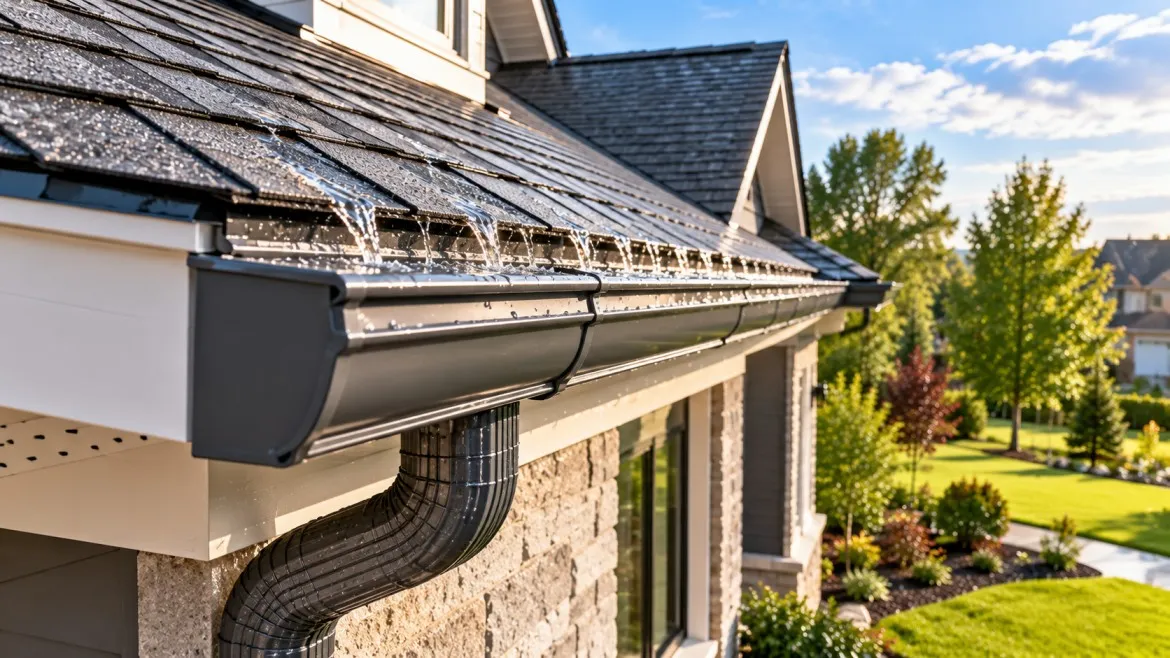
When property owners evaluate roof health, their attention typically focuses on shingles, single-ply membranes, or flashing assemblies. However, even the most durable roofing system cannot fully protect a structure without a properly designed and fully functional gutter assembly. Gutters and downspouts serve as the primary hydrological control system for a building, collecting thousands of gallons of rainwater and snowmelt runoff and channeling it safely away from the property.
Neglecting gutter health compromises the entire building envelope, leading to severe damage across the roof line, exterior fascia, foundation walls, and surrounding landscape.
How Gutters Protect Your Roof and Structural Envelope
A well-installed gutter system acts as a shield for several critical structural areas that would otherwise bear the brunt of uncontrolled water discharge:
- Preventing Fascia and Soffit Rot: Without gutters, water cascading off the roof edge clings to fascia boards and soffit vents via surface tension. Constant moisture exposure causes wooden components to rot, paint to peel, and structural supports to weaken.
- Mitigating Ice Dam Formation: During northern winter months, clogged or sagging gutters trap water along unheated eaves. As temperatures drop, this standing water freezes into heavy ice dams that force meltwater under shingle courses and behind fascia boards.
- Eliminating Water Backups and Deck Saturation: When downspouts or gutters are obstructed, water pools along the roof edge. Over time, standing water degrades underlayments, rots wooden decking, and penetrates interior ceiling spaces.
- Safeguarding Foundations and Basements: Gutters do not just protect the roof—they discharge water far away from foundation footings. Uncontrolled runoff erodes soil, creates hydrostatic pressure against basement walls, and leads to structural cracking or lower-level flooding.
Common Gutter Materials and Architectural Styles
Selecting the right gutter configuration involves balancing structural drainage demands, aesthetic preferences, and long-term durability.
| Gutter Material / Style | Primary Characteristics | Service Life Expectancy | Structural Strengths |
|---|---|---|---|
| Seamless Aluminum (K-Style) | Custom-extruded on site with minimal joinery | 20 – 30 Years | High rust resistance, lightweight, handles heavy volume |
| Half-Round Copper | Premium metallic finish that develops a natural patina | 50+ Years | Exceptional durability, elegant historical aesthetic, zero rust |
| Galvanized Steel | Heavy-duty rigid metal construction | 15 – 20 Years | High impact resistance against falling branches and heavy snow |
| Box Gutters (Concealed) | Integrated directly into the roof structure or parapet | 30 – 50+ Years | Handles high volume on commercial or historical buildings |
Seamless Aluminum vs. Sectional Systems
Traditional sectional gutters rely on vinyl or thin metal pieces joined together with sealants every ten to twenty feet. Over time, thermal expansion, UV exposure, and water pressure cause these seams to degrade and leak.
In contrast, seamless aluminum gutters are custom-fabricated on site to match the exact lengths of the building's eaves. By eliminating seams along the main runs, seamless systems drastically reduce leak points and provide superior structural stability during heavy winter storms.
Key Indications That Your Gutter System Needs Replacement or Upgrade
Recognizing early signs of gutter failure helps property owners address drainage issues before structural roof or foundation damage occurs:
- Pulling Away from the Fascia Line: Sagging gutters indicate broken hidden hangers, rotted fascia wood, or heavy weight strain from trapped debris and ice.
- Peeling Paint or Rust Stains Along Soffits: Water marks or rust streaks running down exterior walls or behind gutter troughs signal active overflowing or rear-edge leakage.
- Standing Water or Biological Growth: Water remaining in troughs long after a storm indicates improper pitching, requiring adjustment to ensure gravity drainage toward downspouts.
- Basement Moisture or Soil Erosion: Deep trenches in landscaping beddings directly beneath eaves show that water is overshooting or bypassing the drainage system completely.
For facility managers and homeowners seeking tailored water management solutions, investing in professionalgutter installation services ensures that gutter sizing, pitch calibration, and downspout placement meet exact regional rainfall metrics.
Essential Preventive Care and Upkeep
To maintain maximum drainage efficiency and extend system lifespan, property owners should adhere to a bi-annual maintenance routine:
- Clear Debris Twice Yearly: Clean out autumn leaves, pine needles, and spring silt in early winter and late spring to maintain unobstructed flow.
- Install Heavy-Duty Gutter Guards: Micro-mesh or solid reverse-curve leaf guards prevent leaves and pine needles from entering the trough while allowing heavy water flow to pass through.
- Verify Downspout Clearance: Ensure downspouts feature extensions or splash blocks that direct discharge at least five to ten feet away from foundation walls.
- Inspect Fasteners and Seals: Check end caps, drop outlets, and hidden mounting brackets regularly, securing loose screws or reapplying high-grade elastomeric sealants where needed.
A fully integrated roofing system relies heavily on functional gutter drainage. By combining high-performance roofing materials with professionally installed and well-maintained gutters, property owners ensure total year-round protection for their entire structure.