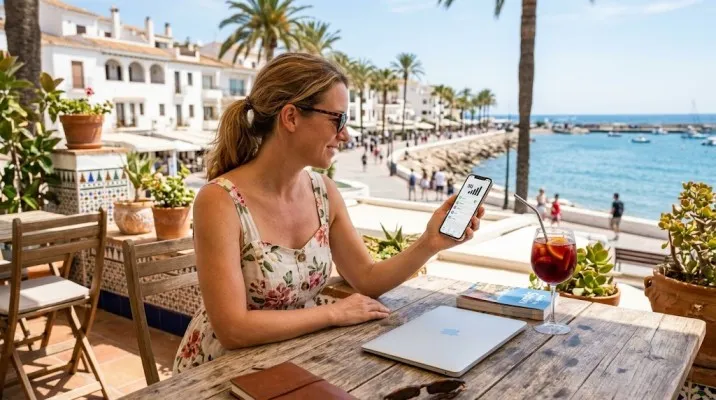
There is a certain rhythm to a British holiday in Spain. The early alarm for the airport, the shuffle through security clutching passports and a lukewarm coffee, and then that first glorious step onto the tarmac when the heat hits you like an open oven door. Whether you are a Costa del Sol regular, a Barcelona city-breaker, a Balearics family or one of the growing number of Brits who now decamp to the Spanish coast for the whole winter, one thing unites us all: the moment we land, we reach for our phones.
And why wouldn't we? A modern Spanish holiday runs on data. We use it to find the beach bar everyone raved about on the group chat, to book last-minute excursions, to summon a rideshare when the taxi rank is heaving, and to send home a smug photo of a paella the size of a bin lid. Yet an astonishing number of holidaymakers still step off the plane with no proper plan for their mobile connection, only to discover the hard way that convenience in Spain has a price. This guide is here to fix that.
Why Mobile Data in Spain Matters More Than You Think
Cast your mind back to the last time you tried to navigate a Spanish old town on foot. The streets in places like Seville, Girona or Palma were laid out long before satnav existed, and a paper map from the hotel lobby will only get you so far before you are standing in a plaza wondering whether you have walked in a complete circle. Reliable mobile data in Spain is the invisible thread that holds a holiday together.
It is not just about maps. It is checking the ferry timetable to Formentera, translating a tapas menu, splitting the bill with the app your friends insist on using, and keeping the kids quiet on a long transfer. Staying connected on a Spanish holiday has quietly become as essential as sun cream and a good pair of flip-flops, and pretending otherwise usually ends in frustration.
The Old Ways of Getting Internet Abroad (And Why They Grate)
For years, Brits abroad had three imperfect options. You could rely on your normal network and simply hope the charges were not too eye-watering, which is a gamble that has ruined many a first-morning mood. You could switch your data off entirely and become that person hovering outside a cafe stealing thirty seconds of wifi to load a map, which is no way to enjoy a holiday. Or you could hunt down a local shop, queue up, and try to buy a physical SIM card in your best phrasebook Spanish.
None of these are much fun. Public wifi is patchy and rarely secure, roaming can be a lottery, and juggling a tiny plastic SIM while balancing a suitcase and a toddler is a recipe for losing your original card forever. There is, thankfully, a far more elegant solution that has quietly taken over among seasoned travellers.
So, What Exactly Is a Travel eSIM?
An eSIM is, in the simplest terms, a SIM card built into your phone that you can program without ever touching a physical card. The "e" stands for embedded. Instead of slotting in a piece of plastic, you download a mobile plan directly onto your device, and it connects you to local networks just as a normal SIM would. Most handsets sold in the last five years or so already have the technology inside, quietly waiting to be used.
A travel eSIM is simply one of these digital plans designed for a specific destination or region. You buy it before you fly, sitting on your sofa with a cup of tea, and it is ready to spring into life the moment you land in Malaga or Alicante. No shops, no queues, no fumbling. For a British holidaymaker, that means you can walk off the plane already connected, already able to order the airport transfer, already back in the group chat.
How eSIMs Work: The Reassuringly Simple Bit
If the word "digital" makes you nervous, relax. The process is genuinely straightforward and does not require any technical know-how. Once you have chosen and paid for a plan, the provider sends you a QR code. You open your phone's settings, tap to add a mobile plan, point your camera at the QR code, and your device does the rest. This QR activation takes under a minute, and there is nothing to install in the traditional sense.
The clever part is that your eSIM can sit happily alongside your existing UK number thanks to dual SIM technology. This means your normal number stays active for calls and texts from home, while the eSIM quietly handles all your data. You will not miss a message from the dog-sitter or a call from your mum checking you landed safely, but you also will not be paying premium rates for the privilege of using Google Maps.
eSIM Versus a Spanish SIM Card: The Honest Comparison
It is a fair question to ask whether you should simply buy a local Spanish SIM when you arrive. The answer depends on how you like to travel. A local SIM can offer competitive rates, but it comes with faff. You often need to show your passport, register the card, and complete the whole transaction in Spanish, all while your holiday time ticks away. If you island-hop or pop across a border to Portugal, that single-country card may leave you stranded.
An eSIM sidesteps all of this. There is no registration desk, no language barrier, and no risk of losing a fiddly bit of plastic. You keep your UK SIM safely in your phone, so there is no chance of it vanishing into a hotel-room drawer never to be seen again. For most Brits on a one or two-week trip, or even a long winter stay, the eSIM route is simply less hassle from start to finish.
Choosing the Right Plan for Your Kind of Holiday
Not every Spanish trip needs the same amount of data, and this is where a little forward planning pays off. A couple on a relaxed week in the Balearics, mostly reading by the pool, will burn through far less than a family constantly streaming, navigating and sharing photos. Long-stay winter-sun visitors and second-home owners, meanwhile, want something generous that lasts for weeks rather than days, ideally with the option to top up without any drama.
The good news is that you can match a plan to your habits rather than guessing. When you are ready to buy an eSIM for Spain, look for clear data allowances, a validity window that comfortably covers your trip, and honest pricing with no lurking surprises. A prepaid Spain data plan means you pay once, know exactly what you are getting, and never receive a nasty bill weeks after you have unpacked the suitcase and washed the sand out of everything.
When weighing up the best travel eSIM for Spain, it also helps to check the coverage. Spain eSIM coverage should stretch beyond the big resorts to the quieter corners you actually want to explore, from a whitewashed pueblo in Andalusia to a vineyard in Rioja. A plan is only as good as the signal it delivers when you are standing somewhere genuinely lovely and want to share it.
Making the Most of Your Data Once You Land
With a working connection from the moment you arrive, the whole holiday opens up. Beach-bar hunting becomes a joy rather than a guessing game, because you can pull up reviews and photos and find the chiringuito serving the coldest cerveza and the best grilled sardines. Booking excursions on the fly, a boat trip along the Costa Brava or a day at the Alhambra, is suddenly effortless, and you are not tied to whatever the hotel desk is pushing.
Then there is the simple pleasure of keeping in touch: a quick WhatsApp home to reassure the family, a video call so the grandparents can see the kids splashing in the sea. Add in reliable rideshares for those evenings when your feet have given up, and translation apps for the specials board, and you see why data has become the quiet hero of the modern British break in Spain.
A Quick Word on Roaming
Yes, some UK networks still include a certain amount of European roaming, and if yours does and the allowance genuinely suits your trip, that is a perfectly reasonable option. But allowances can be capped, fair-use limits can bite on longer stays, and terms have a habit of changing between one summer and the next. Treat roaming as a possible bonus rather than a guaranteed plan, check the small print before you fly, and have a proper data solution lined up so you are never caught out. That is the sensible British approach: hope for the best, but pack a backup.
The Bottom Line for British Holidaymakers
Spain will always be there for us, all sunshine and late dinners and the smell of orange blossom on a warm evening. The only thing that has really changed is how we stay connected while we soak it up. A travel eSIM takes what used to be a nagging worry and turns it into a solved problem you barely think about, leaving you free to concentrate on the important business of choosing between the beach and the pool.
If you would rather spend your holiday enjoying Spain than fretting about signal, sorting your data with Cellesim before you fly is one of the easiest wins going. Do it once, activate in under a minute, and land in the sunshine already connected. Buen viaje, and enjoy every last sardine.