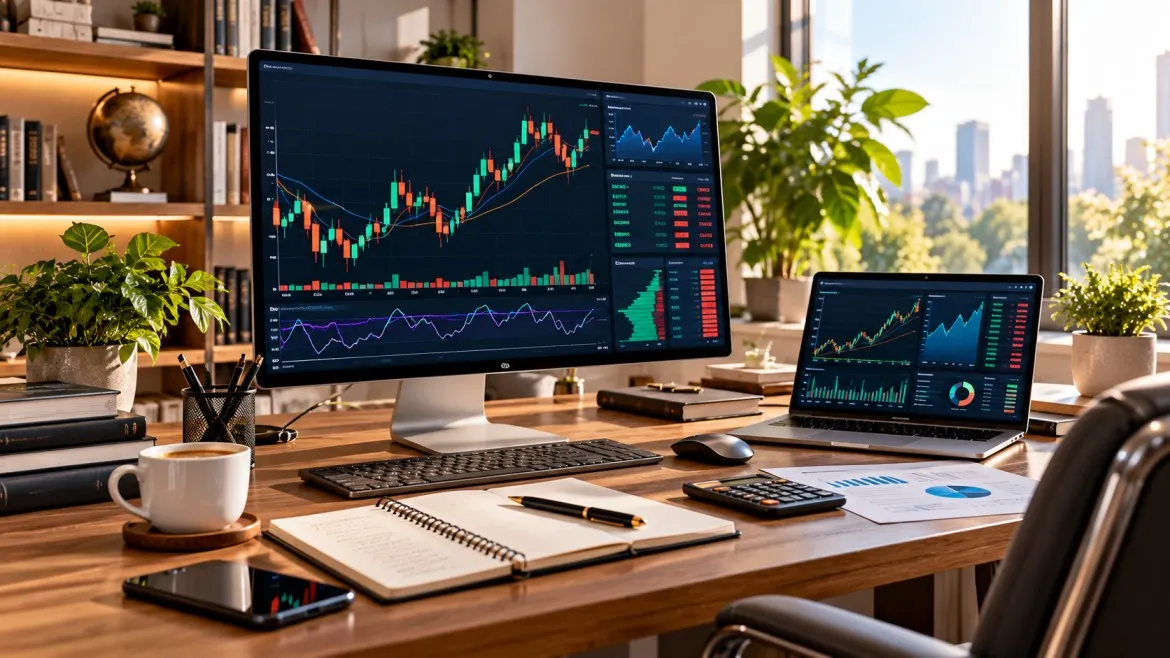
Online trading has become far more accessible over the past decade. With a smartphone and a small amount of money, anyone can now buy and sell financial instruments such as currencies, stocks, commodities, and crypto. But accessible doesn't mean easy, and beginners who understand the basics before risking real money give themselves a much better chance of avoiding costly mistakes.
What Is Online Trading?
Online trading means buying and selling financial assets through a digital platform instead of a traditional broker's office. The goal is to profit from price movements. Depending on the platform, you might trade:
- Forex (currency pairs): for example, EUR/USD
- Stocks and indices: shares of companies or baskets of them
- Commodities: gold, oil, and similar assets
- Cryptocurrencies: Bitcoin, Ethereum, and others
- Options: contracts based on where an asset's price will be at a set time
Each of these carries different levels of risk, costs, and complexity.
Start With Education, Not Money
The most common beginner mistake is depositing money before understanding what they're doing. Before your first trade, learn these basics:
- Price charts and trends: how to read candlestick charts and identify support and resistance levels.
- Leverage and margin: how borrowed funds can magnify gains and losses.
- Spreads, fees, and payouts: every platform has costs that affect your results.
- Risk-reward ratio: how much you stand to lose compared with what you stand to gain.
Use a Demo Account First
A demo account lets you trade with virtual money in real market conditions. It's the best way to test strategies, learn how a platform works, and make beginner mistakes at no cost. Many platforms offer one, including Pocket Option, which provides a free demo account and, according to the platform, allows live accounts to be opened with a minimum deposit of $5.
Keep in mind that demo trading has limits. It doesn't reproduce the emotional pressure of risking real money, so results on a demo account won't always carry over to live trading.
Choose a Platform Carefully
Before depositing funds with any broker, check:
- Regulation: is the broker licensed by a recognized financial authority, and does that license cover your country?
- Legal status in your country: some products, including binary options, are restricted or banned for retail traders in several jurisdictions.
- Withdrawal terms: how quickly, and under what conditions, can you take your money out?
- Transparency: are fees, payouts, and terms clearly explained?
- Independent reviews: look beyond the platform's own marketing.
Manage Your Risk
Even experienced traders lose trades. What separates them from beginners is that they control how much each loss costs. A few core habits:
- Only trade money you can afford to lose. Never use rent, savings, or borrowed money.
- Risk a small percentage per trade. Many traders cap this at 1–2% of their account.
- Avoid chasing losses. Trading emotionally to win back a loss is one of the fastest ways to empty an account.
- Keep a trading journal. Record why you entered each trade and what happened.
- Be skeptical of guarantees. Anyone promising consistent or risk-free profits is misleading you.
Be Realistic About the Odds
Regulators in many countries have found that a majority of retail traders lose money, particularly in short-term and high-leverage products. Trading isn't a shortcut to income. It's a skill that takes months or years to develop, and many people never become consistently profitable. Treat your early trades as education, and start with amounts small enough that a loss won't hurt.
Final Thoughts
Online trading can be an interesting way to learn about financial markets, but the beginners who last are the ones who start slowly. Learn the fundamentals, practice on a demo account, choose a regulated and transparent platform, and manage risk on every trade. Trading involves substantial risk of loss and isn't suitable for everyone. This article is for educational purposes only and isn't financial advice.