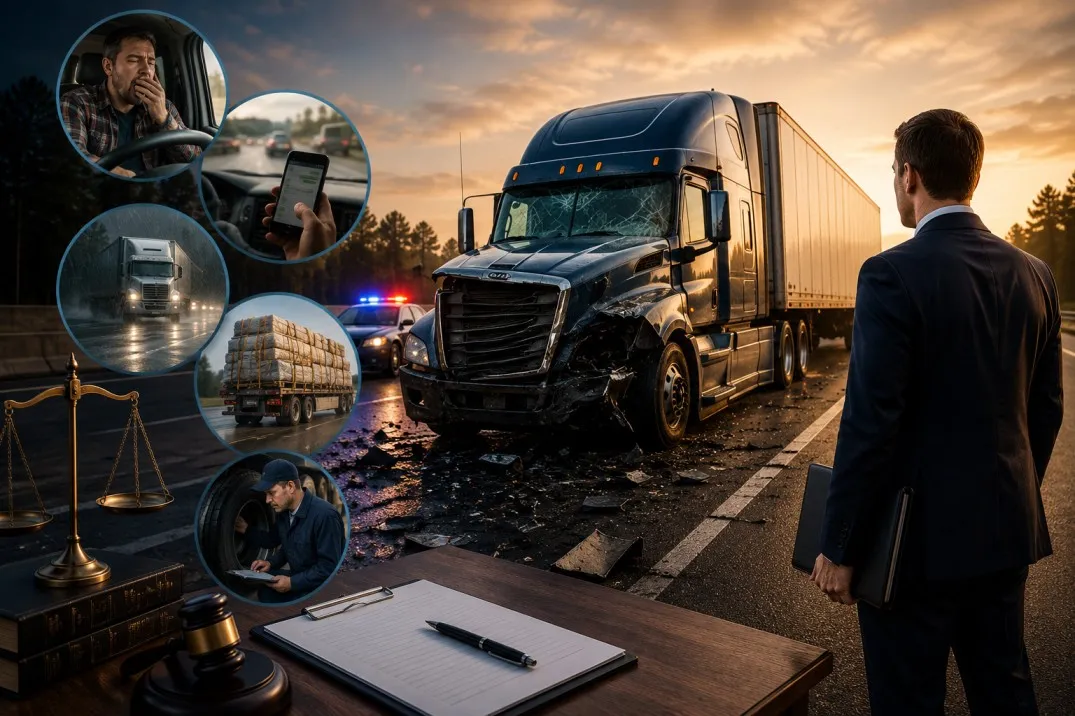
Truck accidents are among the most devastating collisions on the road. A fully loaded commercial truck can weigh many times more than a standard passenger vehicle, which means even a seemingly minor impact can result in severe injuries and significant property damage.
For victims and their families, the aftermath often brings physical pain, emotional stress, financial uncertainty, and countless questions. One of the most important questions is simple: what caused the accident?
Understanding the common causes of truck accidents is essential for determining liability and pursuing compensation. In many cases, multiple factors contribute to a collision, making these claims far more complex than ordinary car accident cases.
If you've been involved in a trucking accident, learning about these causes can help you understand your legal options and why working with an experienced attorney may be crucial.
Why Truck Accidents Are Often More Complicated
Let's be honest, truck accidents rarely have straightforward explanations.
Unlike standard vehicle crashes, commercial trucking operations involve drivers, trucking companies, maintenance teams, cargo loaders, manufacturers, and insurers. Each party has responsibilities that can influence road safety.
When something goes wrong, investigators must determine whether the accident resulted from human error, mechanical failure, regulatory violations, or a combination of several issues.
This complexity is one reason truck accident claims require detailed investigations and extensive evidence gathering.
Driver Fatigue Remains a Leading Cause
One of the most common causes of truck accidents is driver fatigue.
Commercial truck drivers often spend long hours behind the wheel. Although federal regulations limit driving hours and require rest periods, violations still occur.
Fatigue can impair:
- Reaction times
- Decision-making abilities
- Awareness of surroundings
- Vehicle control
In many ways, drowsy driving can be just as dangerous as impaired driving. A tired driver may struggle to respond quickly when traffic conditions change unexpectedly.
Even a momentary lapse in attention can lead to catastrophic consequences when operating a large commercial vehicle.
Distracted Driving Creates Serious Risks
You've probably noticed how common distractions have become on today's roads.
Truck drivers face many of the same distractions as other motorists, including:
- Mobile phone use
- Text messaging
- GPS navigation systems
- Eating while driving
- Adjusting vehicle controls
- Communicating with dispatchers
Because commercial trucks require longer stopping distances and greater manoeuvring space, even brief distractions can significantly increase accident risks.
When drivers take their eyes off the road for only a few seconds, they may travel hundreds of feet without fully observing traffic conditions.
Speeding and Aggressive Driving
Commercial vehicles require considerably more distance to stop than passenger cars.
When truck drivers exceed speed limits or drive too fast for weather and traffic conditions, accidents become more likely.
Speeding can contribute to:
Reduced Reaction Time
Drivers have less time to identify and respond to hazards.
Increased Stopping Distance
Heavy trucks require more room to slow down safely.
Greater Impact Forces
Higher speeds often result in more severe injuries during collisions.
Aggressive behaviours such as tailgating, unsafe lane changes, and failing to yield can also increase the likelihood of serious accidents.
Poor Vehicle Maintenance
Commercial trucks accumulate significant mileage and experience substantial wear and tear.
Proper maintenance is essential for safe operation.
Unfortunately, maintenance failures continue to contribute to many truck accidents.
Common maintenance-related issues include:
Brake Failures
Faulty braking systems can make it impossible for drivers to stop safely.
Tyre Blowouts
Worn or damaged tyres can cause drivers to lose control of their vehicles.
Steering Problems
Mechanical steering failures may prevent drivers from manoeuvring effectively.
Lighting Defects
Malfunctioning lights reduce visibility and increase accident risks, especially at night.
Trucking companies have a responsibility to inspect and maintain their fleets regularly. Failure to do so may result in liability when accidents occur.
Improper Cargo Loading
Believe it or not, cargo itself can become a major safety hazard.
Commercial trucks must be loaded carefully to maintain stability and balance.
Improper loading can lead to:
- Cargo shifts during transit
- Vehicle rollovers
- Jackknife accidents
- Loss of vehicle control
Overloaded trucks present additional dangers by increasing stopping distances and placing extra stress on vehicle components.
In some cases, the company responsible for loading cargo may share liability for resulting accidents.
Inadequate Driver Training
Operating a commercial truck requires specialised skills and knowledge.
Drivers must understand:
- Vehicle handling
- Safety regulations
- Defensive driving techniques
- Cargo management
- Emergency response procedures
When trucking companies fail to provide adequate training, drivers may be unprepared for challenging road situations.
Inexperienced drivers are often more vulnerable to making critical mistakes that lead to collisions.
Driving Under the Influence
Although commercial drivers are subject to strict regulations regarding alcohol and drug use, violations still occur.
Impaired driving can affect:
- Judgement
- Coordination
- Reaction times
- Concentration
Even small levels of impairment can significantly increase the likelihood of a crash involving a large commercial vehicle.
Federal regulations require drug and alcohol testing in many situations, and violations may become important evidence during a legal claim.
Weather-Related Factors
East Texas weather can change quickly.
Rain, fog, thunderstorms, and high winds often create challenging driving conditions.
While weather itself doesn't cause accidents, drivers and trucking companies must adapt to changing conditions appropriately.
Accidents may occur when drivers fail to:
- Reduce speed
- Increase following distance
- Use headlights properly
- Adjust driving behaviour
Professional drivers are expected to exercise reasonable caution when operating in adverse weather.
Mechanical Defects and Manufacturing Issues
Sometimes the problem lies with the truck itself.
Mechanical defects may involve:
- Defective brakes
- Faulty tyres
- Steering system failures
- Engine malfunctions
- Defective safety equipment
When manufacturing defects contribute to an accident, liability may extend beyond the driver and trucking company.
Product manufacturers can sometimes be held responsible for injuries caused by defective components.
Violations of Federal Trucking Regulations
Commercial trucking companies must comply with numerous federal regulations designed to promote safety.
These regulations address:
- Driver qualifications
- Hours-of-service limits
- Vehicle inspections
- Maintenance requirements
- Drug and alcohol testing
- Cargo securement standards
Violations often serve as strong evidence of negligence.
For example, if a company knowingly allows a fatigued driver to exceed legal driving limits, that decision may play a significant role in establishing liability.
The Importance of Thorough Investigations
Determining the true cause of a truck accident requires much more than reviewing a police report.
A comprehensive investigation may involve:
- Examining black box data
- Reviewing maintenance records
- Analysing driver logs
- Interviewing witnesses
- Inspecting vehicle damage
- Consulting accident reconstruction experts
The sooner this process begins, the greater the likelihood of preserving critical evidence.
Trucking companies often deploy response teams immediately after serious accidents. Victims should understand that evidence can disappear quickly if appropriate steps aren't taken.
How an Attorney Helps Establish Liability
Identifying the cause of an accident is only part of the process.
The next step involves connecting that cause to legally responsible parties.
An experienced attorney can investigate whether negligence occurred and determine who may be held accountable.
Potentially liable parties may include:
- Truck drivers
- Trucking companies
- Cargo loading companies
- Maintenance contractors
- Vehicle manufacturers
- Other third parties
Because multiple entities may share responsibility, truck accident claims often require a strategic legal approach.
Working with an experienced East Texas Truck Accident Attorney can help victims understand their rights and pursue compensation from all responsible parties.
Common Injuries Resulting From Truck Accidents
Due to the size and weight of commercial trucks, injuries are often severe.
Victims may suffer:
- Traumatic brain injuries
- Spinal cord injuries
- Broken bones
- Internal injuries
- Severe burns
- Soft tissue damage
Recovery can require months or even years of treatment, creating significant financial and emotional burdens.
Compensation may help cover medical expenses, lost income, rehabilitation costs, and other damages related to the accident.
Protecting Yourself After a Truck Accident
If you're involved in a truck accident, taking the right steps can protect both your health and your legal rights.
Consider:
- Seeking immediate medical attention
- Reporting the accident to law enforcement
- Taking photographs if possible
- Collecting witness information
- Preserving medical records
- Avoiding detailed discussions with insurers before obtaining legal advice
Early action often strengthens future claims and helps preserve important evidence.
Conclusion
Truck accidents occur for many reasons, including driver fatigue, distracted driving, speeding, poor maintenance, improper cargo loading, inadequate training, and regulatory violations. In many cases, multiple factors contribute to a single collision.
Understanding these common causes is essential when pursuing compensation and determining who may be legally responsible.
Because truck accident cases are often complex, victims benefit from prompt investigations and experienced legal guidance. Identifying the true cause of an accident can make a significant difference in the outcome of a claim and help ensure responsible parties are held accountable.
Frequently Asked Questions
What is the most common cause of truck accidents?
Driver error remains one of the leading causes of truck accidents, with fatigue, distraction, and speeding frequently contributing to collisions.
Can multiple parties be responsible for a truck accident?
Yes. Liability may extend to trucking companies, maintenance providers, cargo loaders, manufacturers, and other parties depending on the circumstances.
Why are truck accident investigations so important?
Investigations help identify the true cause of the accident, preserve evidence, and determine which parties may be legally responsible.
What evidence is used in truck accident cases?
Common evidence includes police reports, witness statements, black box data, maintenance records, driver logs, photographs, and expert analysis.
How long does a truck accident claim take?
The timeline varies based on injury severity, liability disputes, evidence collection, and settlement negotiations.
Should I speak with the trucking company's insurance adjuster?
It's generally wise to proceed carefully and seek legal advice before providing detailed statements, as insurance companies often aim to minimise payouts.